When temperatures drop during winter in Long Island, frozen door locks become a surprisingly common problem. Many homeowners discover the issue early in the morning when the key suddenly refuses to turn or the lock feels completely stuck.
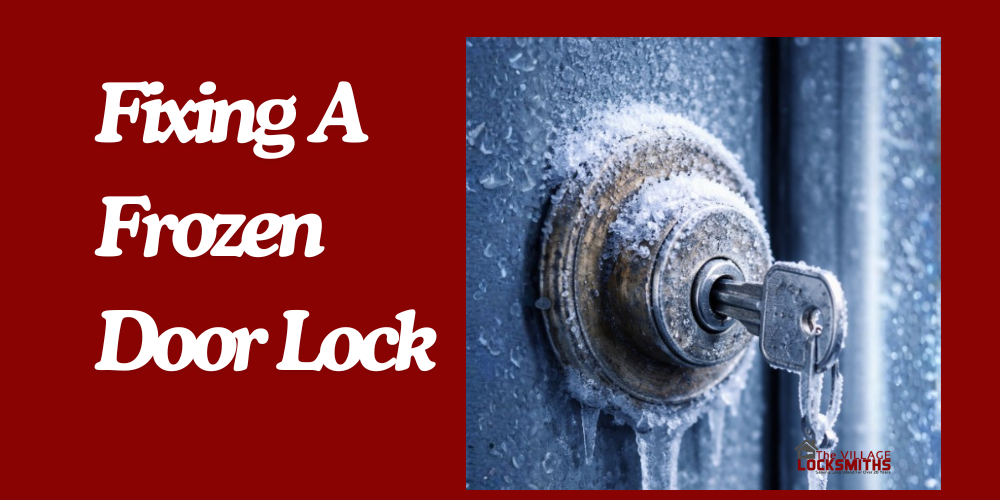
Cold weather can cause moisture inside the lock cylinder to freeze, preventing the internal pins from moving. This can make it impossible to unlock your door and may even lead to a full lockout if the problem isn’t resolved.
Before forcing the key or damaging the lock, there are a few safe methods you can try to unfreeze the lock.
Why Door Locks Freeze in Cold Weather
Locks freeze when moisture builds up inside the lock cylinder and temperatures drop below freezing.
This moisture can come from several sources including snow, rain, condensation, or humidity trapped inside the lock. When the temperature drops quickly, that moisture turns into ice and blocks the internal mechanism.
Common causes of frozen door locks include:
- Moisture entering the lock during rain or snow
- Worn or aging lock cylinders
- Exposure to freezing wind and ice storms
- Using oil-based lubricants that trap moisture
- Lack of preventative maintenance before winter
This problem is especially common during Long Island cold snaps when temperatures fall below 20°F.
Quick Ways to Unfreeze a Door Lock
If your key will not turn or the lock feels frozen, try these methods first before calling a locksmith.
Use Lock De-Icer
Lock de-icer is one of the fastest ways to melt ice inside the cylinder. These products are designed specifically for frozen locks and are available at most hardware stores.
A few drops can quickly dissolve the ice and allow the key to turn normally again.
Warm the Key
Another common trick is warming the key with a lighter for a few seconds before inserting it into the lock.
The heat can melt ice inside the cylinder enough for the key to move the internal pins.
Be careful not to overheat the key, especially if it has a plastic head.
Try Hand Sanitizer
Because it contains alcohol, hand sanitizer can help melt ice inside the lock.
Apply a small amount to the key before inserting it. The alcohol lowers the freezing point and can break up the ice inside the cylinder.
Use Graphite Lubricant
Graphite powder lubricant helps loosen frozen pins and prevents moisture buildup.
Unlike oil-based lubricants, graphite does not trap moisture inside the lock.
Applying graphite lubricant before winter is also a good preventative measure.
What NOT to Do With a Frozen Lock
Some common DIY solutions can actually damage your lock.
Avoid these methods:
- Pouring boiling water on the lock
- Forcing the key to turn
- Spraying WD-40 into the cylinder
- Hitting the lock with tools
- Using excessive heat
Hot water may temporarily melt the ice, but it often refreezes quickly and makes the problem worse.
Forcing the key can break it inside the lock, which creates a much bigger issue.
When You Should Call a Locksmith
If the lock still will not turn after trying safe solutions, the lock may be frozen internally or damaged.
A professional locksmith can safely inspect the lock and determine whether it needs to be repaired or replaced.
Common locksmith solutions include:
- Safely opening the door without damage
- Removing broken keys
- Repairing the lock mechanism
- Replacing the lock cylinder
- Rekeying the lock if necessary
During winter storms and extreme cold in Long Island, emergency locksmith calls increase significantly due to frozen locks and home lockouts.
How to Prevent Frozen Door Locks
Preventing frozen locks is much easier than dealing with an emergency lockout.
Homeowners can reduce the risk of frozen locks by taking a few simple precautions.
Helpful prevention tips include:
- Apply graphite lubricant before winter
- Keep exterior locks dry when possible
- Install protective lock covers
- Replace worn locks that freeze repeatedly
- Clear ice buildup around the door area
Regular maintenance can help ensure your locks continue working properly throughout the winter.
Frozen Lock and Locked Out?
If your door lock is frozen and you cannot get inside your home, a professional locksmith can safely unlock the door and repair the lock without causing damage.
24/7 Emergency Locksmith • Fast Response in Long Island
FAQs
Can you pour hot water on a frozen door lock?
Hot water may melt ice temporarily, but it can refreeze quickly and make the problem worse. It may also damage the lock mechanism.
Does WD-40 fix frozen locks?
WD-40 is not recommended for frozen locks because it can trap moisture inside the cylinder. Graphite lubricant is usually a better option.
Can a locksmith fix a frozen lock?
Yes. A locksmith can safely open the lock, remove ice buildup, repair the mechanism, or replace the lock if necessary.
Why does my door lock freeze every winter?
Repeated freezing may indicate moisture inside the lock or a worn lock cylinder. In some cases, replacing the lock may be the best long-term solution.
Final Thoughts
Frozen door locks are a common issue during Long Island winters, especially during snowstorms and sudden temperature drops.
Trying safe DIY methods may help in some cases, but if the lock remains stuck, professional locksmith service can resolve the issue quickly and safely.
Taking preventative steps before the next cold snap can also help keep your locks working properly throughout the winter season.