When a business in Long Island needs to secure its property, one of the most common decisions is rekeying or replacing locks. Understanding the difference between rekeying and lock replacement is essential for maintaining strong security.
While both options improve protection, choosing the right lock rekeying or replacement option depends on your situation, budget, and long-term security goals.
What Is the Difference Between Rekeying and Replacing Locks?
The main difference between rekeying and replacing locks is how the security is updated.
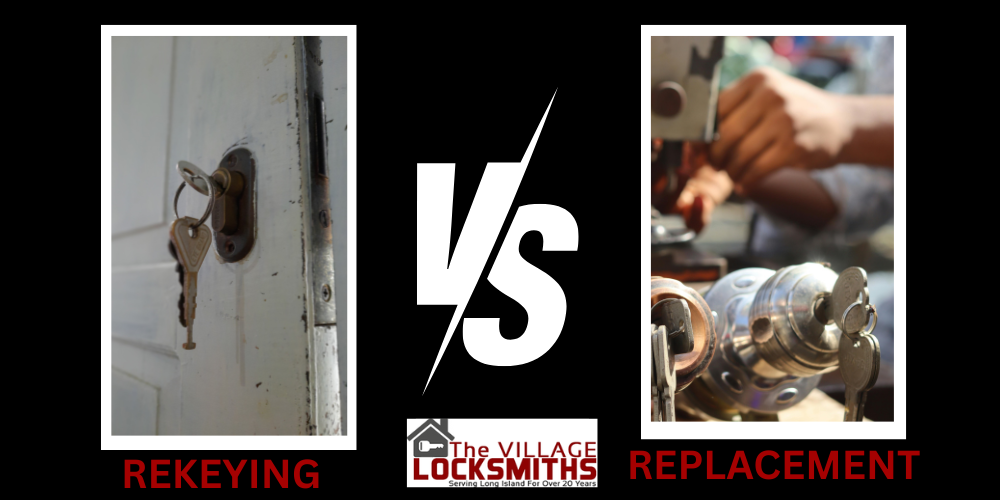
Rekeying changes the internal mechanism of the lock so old keys no longer work, while replacing locks involves removing the entire hardware and installing a new one.
For many businesses across Long Island, the decision comes down to cost, urgency, and whether existing locks are still reliable.
What Is Rekeying (And When It Makes Sense)
Rekeying is a process where a locksmith adjusts the internal pins of a lock so it works with a new key. Old keys will no longer function, improving security without changing the hardware.
Best situations for lock rekeying:
- Employee turnover or staffing changes
- Lost, stolen, or unreturned keys
- Moving into a new commercial space
- Creating a master key system
Why Long Island businesses choose rekeying:
- More affordable than replacing locks
- Quick service with minimal downtime
- Keeps existing hardware intact
If your locks are from trusted brands like Schlage or Yale, rekeying is often the most practical option.
What Is Lock Replacement
Lock replacement involves completely removing your current lock and installing new hardware.
This option is typically chosen when businesses need stronger security, upgraded technology, or when locks are damaged.
When replacing locks is the better option:
- After a break-in or attempted forced entry
- Locks are worn, outdated, or unreliable
- Upgrading to smart locks or access systems
- Compliance with updated building codes
Benefits of lock replacement:
- Higher level of security
- Access to modern locking systems
- Improved durability for high-traffic use
Many businesses in Nassau County and Suffolk County upgrade to high-security locks like Medeco to prevent unauthorized duplication.
Is Changing Locks the Same as Rekeying?
Many business owners assume that changing locks and rekeying are the same, but they are actually different.
Changing locks refers to full lock replacement, while rekeying keeps the existing hardware but changes the internal key configuration.
Understanding this difference helps businesses choose the right security option without overspending.
Rekey vs Replace: Side-by-Side Comparison
| Factor | Rekeying | Replacing Locks |
|---|---|---|
| Cost | More affordable | Higher upfront cost |
| Time | Faster service | Longer installation |
| Security Upgrade | Basic improvement | Advanced security |
| Hardware Change | No | Yes |
| Best For | Access control issues | System upgrades |
What Most Long Island Businesses Actually Do
Across commercial areas like Huntington and Garden City, many businesses use a combination of both strategies.
Smart approach:
- Rekey interior doors after employee changes
- Replace exterior or main entry locks for better security
This balanced method gives you strong protection while controlling costs.
When You Should Take Immediate Action
Do not delay if your business is experiencing:
- Lost or missing keys
- Former employees still have access
- Signs of forced entry
- Locks that are sticking or failing
Ignoring these issues can create serious security risks.
Cost Expectations for Long Island Businesses
Costs vary depending on the size of your property and type of locks:
- Rekeying is typically priced per lock cylinder
- Replacing locks depends on hardware type and complexity
Rekeying is often a short-term, cost-effective fix, while replacement is a long-term security investment.
Pro Tip: Think Beyond Traditional Locks
Security is evolving, especially for growing businesses in Long Island.
Consider upgrading to:
- Access control systems
- Keyless entry solutions
- Master key systems
These options provide better control, tracking, and scalability.
Final Verdict: Rekey or Replace?
- Choose rekeying if your locks are in good condition and you need better access control
- Choose replacing locks if you want stronger security or updated technology
Understanding the differences between rekeying and replacing locks allows you to make smarter decisions for your business.
If you’re unsure, a commercial locksmith in Long Island can assess your system and recommend the best solution.
FAQs
Is it cheaper to rekey or replace locks?
Rekeying is usually more affordable since it keeps the existing hardware, while replacing locks involves new materials and installation.
Can all commercial locks be rekeyed?
Most standard commercial locks can be rekeyed, but some high-security systems may require replacement.
How often should businesses change or rekey locks?
Businesses should rekey or replace locks after employee turnover, lost keys, or security concerns.
Need a Commercial Locksmith in Long Island?
Whether you need lock rekeying or full lock replacement, working with a trusted commercial locksmith like The Village Locksmiths ensures your business remains secure and protected.